Why Switch to a Zero Waste Dishwashing Brush?
Upgrade your kitchen routine with a smarter, cleaner, and eco-friendly solution.
Washing dishes is part of everyday life — but the tools you use matter more than you think. Traditional sponges and plastic brushes may seem harmless, but over time they contribute to waste, bacteria buildup, and even microplastic pollution.
Switching to a zero waste dishwashing brush is a simple upgrade that can make your kitchen cleaner and more sustainable at the same time.
Why Make the Switch?
Replacing plastic-based cleaning tools with natural alternatives helps reduce landfill waste and limits exposure to microplastics in your home.
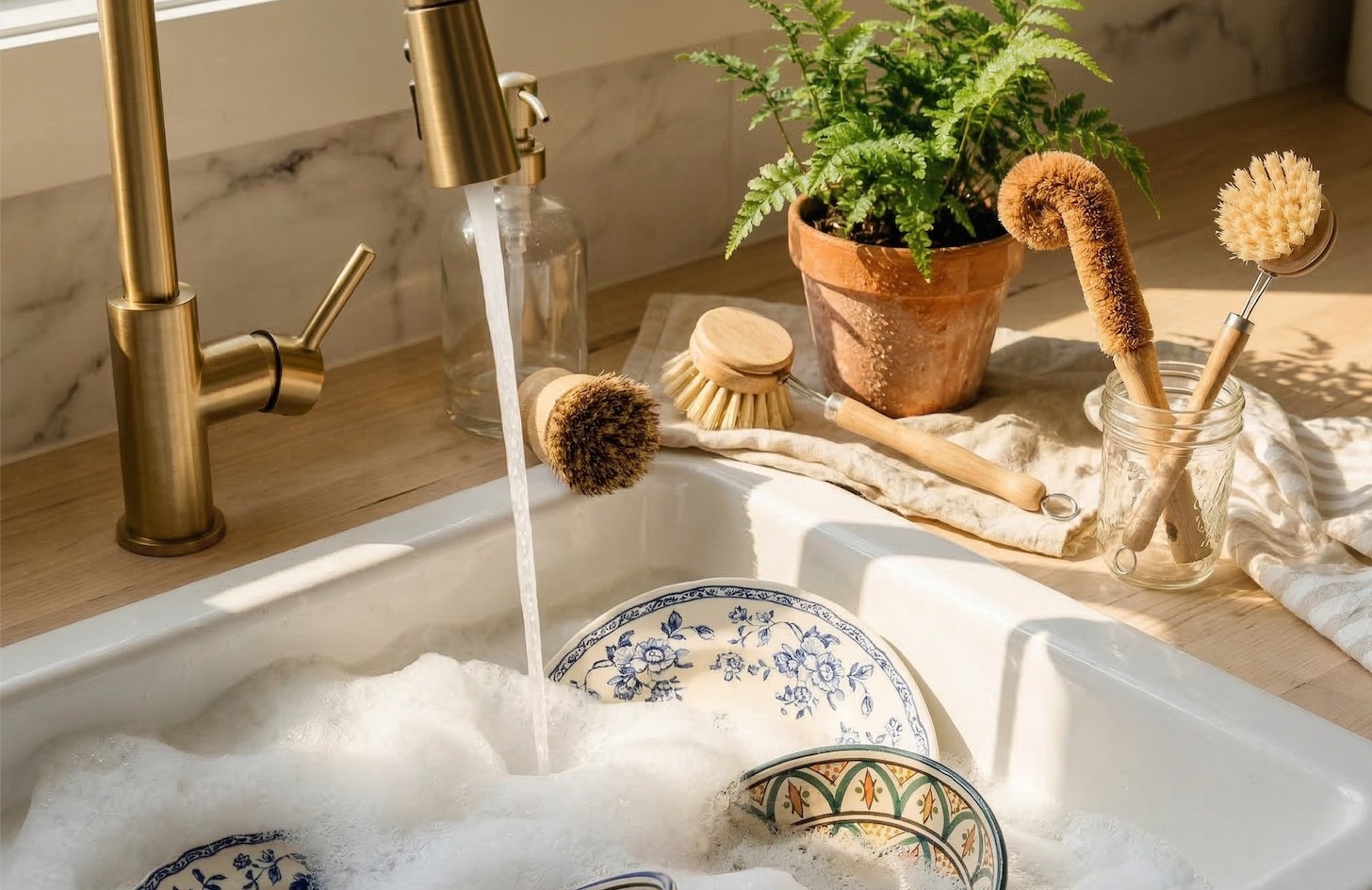
Conventional sponges are often made with synthetic materials that are difficult to recycle and end up in landfills. Natural brushes made from bamboo and plant fibers provide a more sustainable alternative without sacrificing cleaning performance.
Better Hygiene for Your Kitchen
Sponges tend to trap moisture, making them the perfect environment for bacteria growth. In contrast, dishwashing brushes dry faster and are easier to keep clean.
- Less odor
- Less bacteria buildup
- A fresher cleaning experience
Synthetic sponges can also release microplastics as they break down — something natural brushes help eliminate.
Dish Brush vs Sponge vs Plastic
| Feature | Natural Brush | Sponge | Plastic Brush |
|---|---|---|---|
| Hygiene | Dries quickly | Traps bacteria | Moderate |
| Eco Impact | Biodegradable | Plastic waste | Non-degradable |
| Durability | Long-lasting | Short lifespan | Medium |
| Microplastics | None | Yes | Yes |
How to Choose the Right Brush
- Handle: Long for deep pots, short for daily use
- Bristles: Coconut or plant fibers
- Material: Bamboo or wood
- Replaceable head: Reduce waste
How to Care for Your Brush
- Rinse after each use
- Air dry completely
- Soak in vinegar occasionally
- Avoid leaving in water
Ready to upgrade your kitchen?
Shop Eco-Friendly Dish Brushes →


